Article Sep 28, 2026, 07:00 AM
What Is Software Asset Management and Why Do Companies Need It?
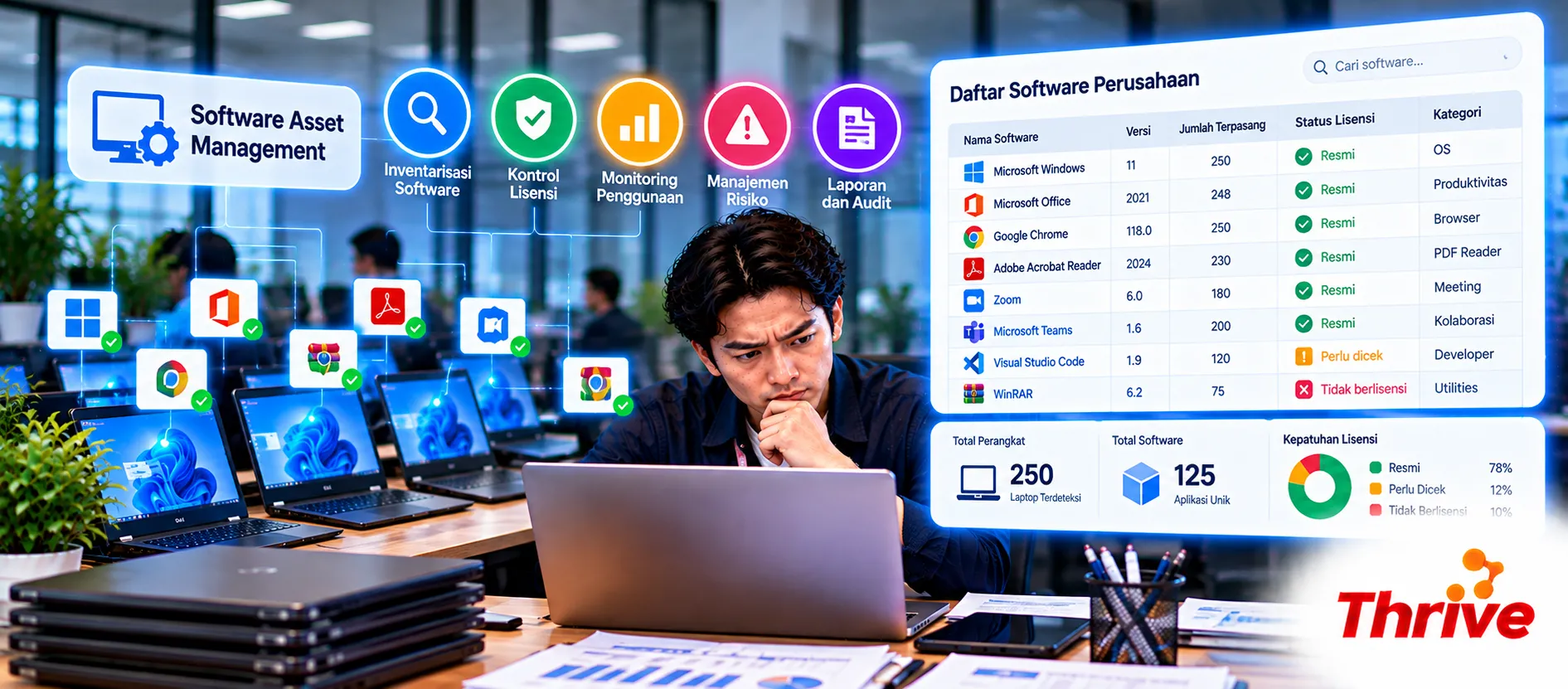
A company may use dozens of applications without clearly knowing how many licenses are actually in use, who the users are, when subscriptions expire, or whether there is still software installed that is no longer needed. This is where Software Asset Management (SAM) plays an important role.
Simply put, Software Asset Management is the process of recording, controlling, and optimizing software throughout its lifecycle. So when a company purchases affordable genuine software, the management process does not end once the software has been activated.
What Is Actually Managed in SAM?
Software inventory: Identifying which applications are used by the company.
License management: Matching software usage with the licensing rights owned.
Renewal management: Monitoring subscriptions before they expire.
Cost optimization: Identifying unused licenses or duplicate software.
Data related to affordable genuine software can be managed together with user, device, vendor, cost, and license validity information.
SAM Is More Than Just a Software List in Excel
For a small company with 10–20 laptops, a spreadsheet may still be sufficient. However, when the number of devices grows to 100, 300, or more, software management becomes much more complex.
Imagine a company with 200 employees, with each person using an average of five business applications. That creates a potential 1,000 relationships between users and software that need to be tracked.
Software Asset Management helps companies manage these relationships in a structured way.
Every purchase of affordable genuine software can be recorded based on the number of seats, users, devices, purchase date, and renewal date.
1. Identify Which Software Is Actually Being Used
The first step in SAM is building a software inventory.
The IT team needs to know which applications are installed, which versions are being used, which devices they are installed on, and who the users are.
This data can then be compared with the list of affordable genuine software already purchased by the company.
This process helps identify unknown software, outdated versions, duplicate applications, and tools installed independently by employees.
2. Match Installations with License Ownership
The next stage is license reconciliation.
For example, a company may discover that a particular application is being used by 120 users, while Procurement records show that only 100 licenses have been purchased.
That leaves a difference of 20 users that needs to be investigated.
Conversely, the company may own 150 licenses while only 100 users are actively using them. This means there could be 50 unused seats.
By managing affordable genuine software together with actual usage data, purchasing decisions become more accurate.
3. Control Subscription Costs
Modern software often uses monthly or annual subscription models. Without proper monitoring, subscriptions may continue to renew even when the users are no longer active.
For example, if there are 20 unused licenses costing Rp200,000 per month, the potential unused cost would be:
20 × Rp200,000 × 12 = Rp48,000,000 per year.
SAM helps Finance and Procurement evaluate affordable genuine software before renewals are processed.
This allows the number of affordable genuine software licenses to be adjusted according to actual business needs.
4. Manage the Software Lifecycle
Software has a lifecycle:
request → purchase → deployment → usage → renewal → retirement
SAM ensures that every stage is recorded.
When a new employee joins, a license can be allocated. When an employee leaves the company, the license can be reviewed to determine whether it should be terminated or reassigned.
Managing affordable genuine software in this way helps companies avoid continuing to pay for licenses that are no longer being used.
SAM also helps determine when affordable genuine software should be updated, replaced, or discontinued because it is no longer relevant.
Start SAM with 7 Simple Steps
Create a list of all company software and subscriptions.
Record users, devices, versions, number of seats, and vendors.
Store invoices and purchasing documents centrally.
Match actual usage with the number of affordable genuine software licenses owned.
Create renewal reminders 30–60 days in advance.
Review unused licenses every 3–6 months.
Assign a PIC responsible for affordable genuine software data and coordination with IT, Procurement, and Finance.
FAQ
1. What is Software Asset Management?
Software Asset Management is the process of managing software throughout its lifecycle, from request, purchase, deployment, and usage to renewal and retirement.
2. Do small companies need SAM?
Yes, but they do not necessarily need a complex system. Companies with 10–20 devices can start with a structured spreadsheet.
3. What is the difference between software inventory and SAM?
Software inventory only records which applications are installed or being used. SAM is broader because it also covers licenses, costs, contracts, renewals, compliance, and the software lifecycle.
4. Who is responsible for SAM?
IT usually acts as the operational owner, but Procurement and Finance should also be involved because they manage purchasing, vendors, invoices, budgets, and renewals.
5. How can SAM reduce costs?
SAM helps identify unused seats, duplicate tools, and subscriptions that are no longer needed. This data allows companies to purchase affordable genuine software according to actual requirements.
6. How often should software assets be reviewed?
For companies that frequently add or remove users, reviewing software assets every 3–6 months can serve as a practical baseline.
7. What data should be recorded?
At minimum, record the software name, vendor, license type, user, device, number of seats, price, invoice, purchase date, renewal date, and PIC. This information makes future affordable genuine software requirements easier to forecast.
Software Asset Management is more than just an IT administrative task. SAM helps companies understand what software they own, who is using it, how much it costs, and when it should be renewed or discontinued.
With centralized data, companies can purchase affordable genuine software based on real requirements while reducing unused licenses and unnecessary purchases.
Ultimately, managing affordable genuine software based on SAM principles makes software assets easier to control, costs more transparent, and licensing processes better prepared to support company growth.
Related Articles
Also read other interesting information from us

General
Benefits of Cheap Website Creation for Modern Businesses
Benefits of Cheap Website Creation for Modern BusinessesIn today's digital age, a website has become one of the most imp...

General
All-in-One Website Solution for Your Business in the Digital Era
In today's rapidly developing digital era, having a strong and functional website is very important for business success...

General
Online Store Website Creation Services: Features, Prices and Advantages
The rapid development of e-commerce has encouraged many business people to immediately have their own online stores. How...
Get Free Consultation
Discuss your company's IT needs with our customer support right now at
+62 822 9998 8870


