Article Sep 28, 2026, 07:09 AM
Too Many Idle Software Licenses? Here’s How to Reduce Company Subscription Costs
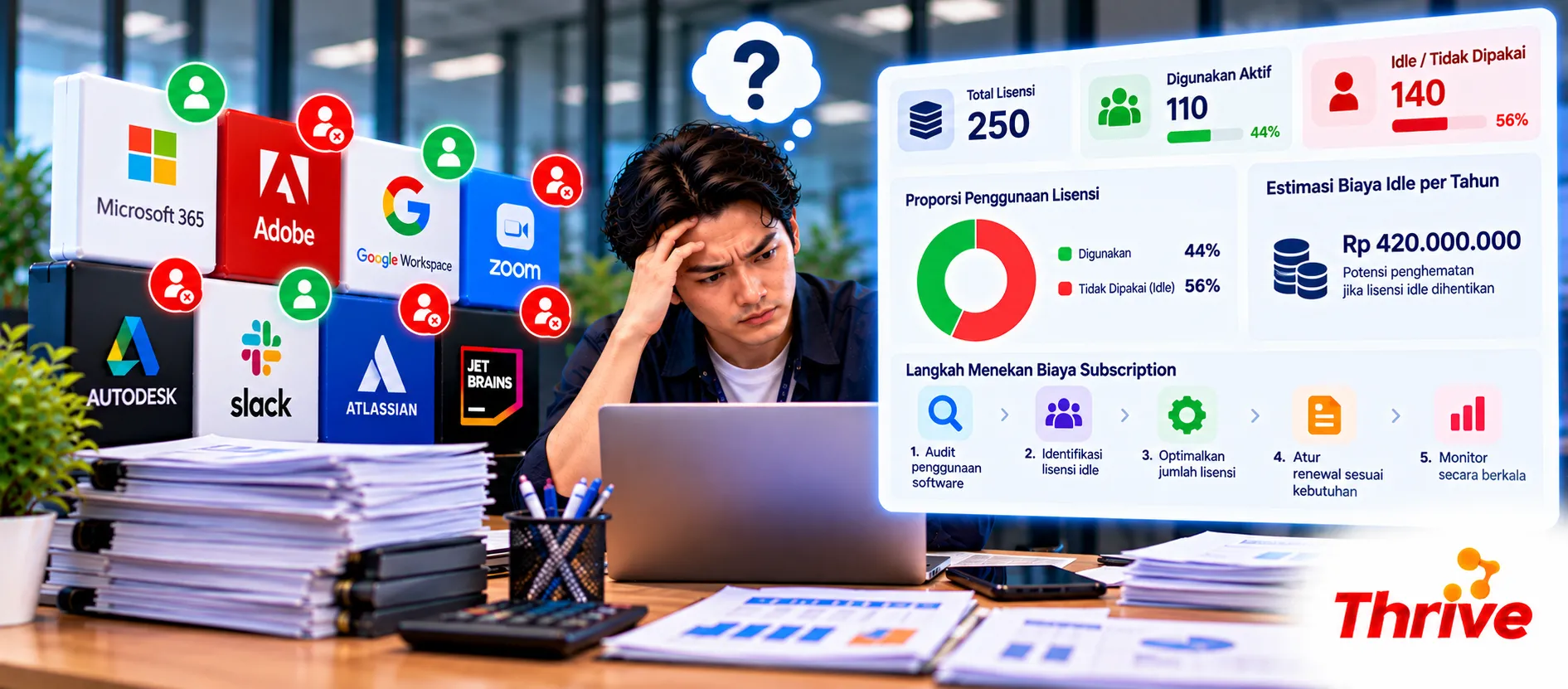
Software subscriptions may seem inexpensive when calculated per user. However, when a company uses dozens of applications across hundreds of employees, unused licenses can quickly turn into a significant recurring expense.
The problem is that idle licenses often go unnoticed because invoices continue to be paid every month or year. That is why, before adding more affordable genuine software, companies need to know how many seats are truly active, rarely used, or no longer used at all.
How Can Companies Reduce Subscription Costs?
Compare purchased seats, assigned seats, and active users.
Identify accounts that have been inactive for 30–90 days, depending on the application’s usage pattern.
Reclaim licenses from employees who have resigned or changed roles.
Review affordable genuine software requirements around 30–60 days before renewal.
Check opportunities to downgrade plans, reduce seats, or consolidate applications with similar functions.
Idle Licenses Can Drain the Budget Without Being Noticed
For example, suppose a company has 200 subscriptions costing Rp300,000 per user per month.
After reviewing usage, the company discovers that 35 accounts are no longer active or no longer need the application.
The potential cost that should be evaluated is:
35 × Rp300,000 × 12 = Rp126,000,000 per year
This figure shows why the procurement of affordable genuine software should be followed by usage monitoring after purchase.
The cost per seat may look small, but accumulated unused seats can create a significant annual expense.
Differentiate Between Assigned and Active Licenses
A license that has already been assigned to a user is not necessarily being actively used.
For example:
Purchased: 200
Assigned: 185
Active: 145
This means 15 seats have not yet been assigned, while 40 assigned seats need to be reviewed for actual usage.
When managing affordable genuine software, companies should track not only purchase quantities but also utilization.
Usage data for affordable genuine software can be reviewed through admin portals, login activity, endpoint inventory, or usage reports provided by the vendor.
Reclaim Licenses from Users Who No Longer Need Them
Employee resignation is one of the most common causes of idle licenses.
A similar issue can occur when employees move to different departments. Software required in their previous roles may no longer be necessary.
Create a simple process:
Offboarding → Check Account → Reclaim License → Reassign or Cancel
With this workflow, affordable genuine software previously assigned to former users can be transferred to new employees if the licensing terms allow it.
This means companies do not always need to purchase new affordable genuine software every time a new employee is onboarded.
Check Whether Every User Needs the Highest-Tier Plan
Waste does not only come from idle seats.
Companies may also be paying for premium plans for users who only require basic features.
For example, out of 100 users, perhaps only 25 need advanced reporting. If the vendor offers multiple subscription tiers, the remaining 75 users could be evaluated for a more appropriate plan.
When choosing affordable genuine software, compare the features of each tier with role requirements instead of assigning the same plan to everyone.
This strategy is often called license rightsizing: adjusting the quantity and level of affordable genuine software to match actual needs.
Look for Duplicate Tools
Companies may also use several applications with nearly identical functions.
For example, there may be three meeting tools, two project management platforms, or multiple PDF applications used by different departments.
Create a simple mapping:
Software → Function → Department → Active Users → Annual Cost
If several tools have overlapping functions, evaluate whether they can be consolidated.
Through consolidation, the budget for affordable genuine software can be redirected toward applications that provide real business value.
Do Not Wait Until the Renewal Invoice Arrives
The best time to optimize subscriptions is not after the renewal invoice has already been issued.
Start the review 30–60 days before renewal so IT, Procurement, and Finance have enough time to check usage, request quotations, and determine the appropriate number of seats.
Regular reviews of affordable genuine software also help companies identify cost trends before subscription expenses grow without proper control.
7 Steps to Reduce Idle Licenses
Create an inventory of all subscriptions.
Record purchased, assigned, and active seats.
Identify inactive accounts based on actual usage patterns.
Reclaim licenses during offboarding or role changes.
Evaluate affordable genuine software subscription tiers based on user requirements.
Identify applications with overlapping functions.
Review affordable genuine software at least 30–60 days before renewal.
FAQ
1. What is an idle license?
An idle license is a license that is available or already assigned to a user but has not been actively used for a certain period.
2. Should an account that has not logged in for 30 days be immediately removed?
No. Review the user’s work pattern first. Some applications may only be required during specific periods.
3. How can companies identify software that is rarely used?
Use admin portals, login history, usage reports, endpoint management tools, or activity data provided by the vendor.
4. What is the difference between reclaiming and canceling a license?
Reclaiming means taking a seat back from a user so it can be reassigned. Canceling means reducing or terminating the subscription according to the vendor’s terms.
5. Do all users need to use the same subscription plan?
Not always. If the vendor provides multiple tiers, companies can assign plans based on the features required by each role.
6. Who should conduct subscription reviews?
IT reviews actual usage, Procurement manages vendors and contracts, while Finance evaluates costs. Requirements for affordable genuine software should ideally be reviewed together.
7. How often should subscriptions be reviewed?
A comprehensive review can be conducted every 3–6 months, with an additional dedicated review before renewal.
Reducing subscription costs does not mean removing as much software as possible. The goal is to make sure every paid seat has a clear business reason.
With utilization monitoring, license reclamation, rightsizing, and application consolidation, requirements for affordable genuine software can be aligned with actual usage.
Ultimately, disciplined management of affordable genuine software helps companies reduce recurring costs without sacrificing the applications employees genuinely need to do their work.
Related Articles
Also read other interesting information from us

General
Don't Pay for Website Creation Services Before You Read This Article!
Dalam dunia digital saat ini, memiliki website adalah kebutuhan mutlak bagi bisnis. Namun, sebelum Anda memutuskan untuk...

General
Cheap vs. Premium Website Creation: Differences in Technology & Maintenance
In the digital business world, the choice between affordable and premium website design significantly determines the qua...

General
Front-End vs Back-End Developer: What is the Role of Web Developers in Indonesia?
In the world of website development, there are two terms that are often heard: front-end and back-end developer. Both ar...
Get Free Consultation
Discuss your company's IT needs with our customer support right now at
+62 822 9998 8870


