Article Aug 4, 2026, 07:03 AM
OEM, Retail, Volume, or Subscription? Choose the Right Software License
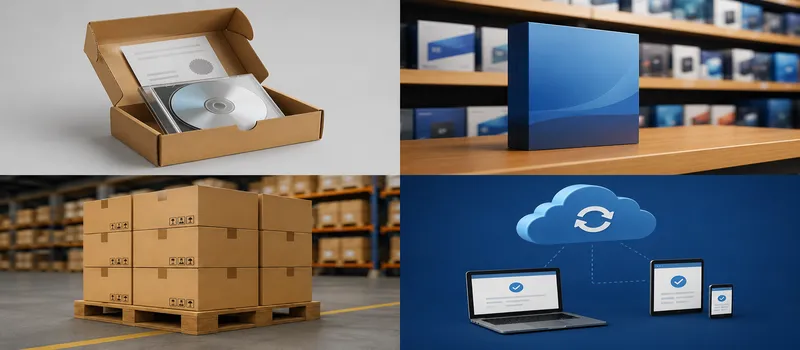
When searching for a software license, you'll often come across terms such as OEM, Retail, Volume, and Subscription. While all four are legitimate licensing models, they differ in terms of usage rights, validity period, activation methods, and flexibility.
Choose Based on How You'll Use It—Not Just the Price
OEM licenses are tied to the original device and usually cannot be transferred.
Retail licenses offer greater flexibility because they can typically be moved to another device according to the vendor's terms.
Volume licenses are ideal for organizations with multiple users or devices.
Subscription licenses are billed monthly or annually and remain active as long as the subscription is maintained.
Before choosing a software license, calculate the number of devices, users, expected usage period, and future upgrade requirements.
Understanding the Differences in Real-World Use
One of the most common mistakes is selecting a software license simply because it has the lowest upfront price. However, the initial purchase cost doesn't always reflect the total cost of ownership over one to three years.
OEM License
An OEM (Original Equipment Manufacturer) license is typically sold together with a new desktop or laptop computer. It is activated on a single device and is permanently linked to the hardware, especially the motherboard.
Its primary advantage is affordability. However, if the device experiences a major hardware failure or the motherboard is replaced, the license may no longer be valid. Therefore, if you're searching for a software license for a fixed workstation or dedicated business computer, an OEM license can be a cost-effective solution.
However, OEM licenses are generally not recommended for organizations that frequently replace or upgrade their computers.
Retail License
A Retail license is purchased separately from the hardware. Activation is usually completed using a product key or a user account.
Its biggest advantage is flexibility. The license can typically be transferred from one computer to another, provided it remains activated only on the number of devices permitted by the vendor. If you're looking for a software license for an individual user or a small team, Retail licensing offers greater control.
Retail licenses generally cost more than OEM licenses because they provide broader usage rights.
Volume License
A Volume License is designed for organizations that require multiple software licenses—for example, 10, 50, or even hundreds of devices. License deployment and management are centralized, eliminating the need for IT administrators to activate every device individually.
In enterprise environments, Volume Licensing simplifies software deployment, compliance audits, user expansion, and access management. If you're searching for software licenses for offices, schools, government agencies, or businesses with multiple branches, this licensing model is usually the most efficient choice.
Keep in mind that minimum purchase requirements and contract terms vary by vendor.
Subscription License
A Subscription License operates on a monthly or annual payment model. Users retain access to the software as long as the subscription remains active.
Subscription plans often include software updates, cloud storage, collaboration features, and technical support. If your organization relies on software that requires continuous improvements and the latest features, this model is often the best option.
The main drawback is that access may end if the subscription is not renewed. For this reason, renewal costs should be included in your company's annual operating budget.
How to Choose the Right License
Choose OEM for fixed devices when working with a limited budget.
Choose Retail if you expect to move the license to another device in the future.
Choose Volume Licensing if your organization has dozens of users or devices.
Choose Subscription Licensing if you need regular updates, cloud services, and collaboration tools.
Compare the total cost of ownership over 12 to 36 months.
Confirm that the license permits commercial use.
Verify the available activation and technical support before purchasing.
Keep invoices, product keys, and license expiration records organized.
Purchase software licenses through an authorized and trusted licensing partner.
Frequently Asked Questions
Is an OEM license legal?
Yes. OEM licenses are completely legal when purchased from authorized distributors or certified partners and used according to the vendor's licensing terms.
Can an OEM license be transferred to another computer?
Generally, no. OEM licenses are permanently linked to the first device on which they are activated.
Can businesses use Retail licenses?
Yes, provided that the specific product edition and license terms permit commercial use.
When does a company need a Volume License?
Volume Licensing is typically the best option for organizations with many devices, centralized deployment requirements, or frequent software compliance audits.
Is a Subscription license more expensive?
Not necessarily. Subscription plans usually have lower upfront costs, but the total expense should be evaluated over a one- to three-year period.
What happens if a Subscription license is not renewed?
Access to the software, premium features, and cloud services may be suspended after any applicable grace period expires.
Which licensing model is best for small businesses?
Retail licenses are often suitable for businesses with only a few computers. Subscription licenses are a better choice for companies that depend on cloud services, collaboration features, and continuous software updates.
Conclusion
When searching for a software license, don't compare prices alone. Consider transfer rights, activation methods, the number of users, license duration, and long-term business requirements.
Working with a trusted licensing partner reduces the risk of selecting the wrong product, choosing an unsuitable license type, or encountering activation issues. A knowledgeable partner can also provide valuable guidance when purchasing software licenses for more complex business environments.
By understanding the differences between OEM, Retail, Volume, and Subscription licenses from the beginning, you can choose a software licensing solution that is more secure, cost-effective, and aligned with your organization's operational needs.
Related Articles
Also read other interesting information from us

General
5 Tips for Optimizing Data Management in Your Company
In an increasingly data-driven business world, effective data management has become critical to improving operational ef...

General
Don't Create a Website Before Reading This! Fatal Mistakes to Avoid
Creating a website looks easy, but if you are not careful, the end result could be disappointing and even detrimental to...

General
Virtual Desktop & Remote Access Software for Remote Work
In the era of flexible work and high mobility, the need for remote work access is increasing. Virtual Desktop and Remote...
Get Free Consultation
Discuss your company's IT needs with our customer support right now at
+62 822 9998 8870


