Article Sep 29, 2026, 01:23 AM
High Restaurant Sales but Hard to Monitor Profits? It's Time to Integrate POS and Accounting
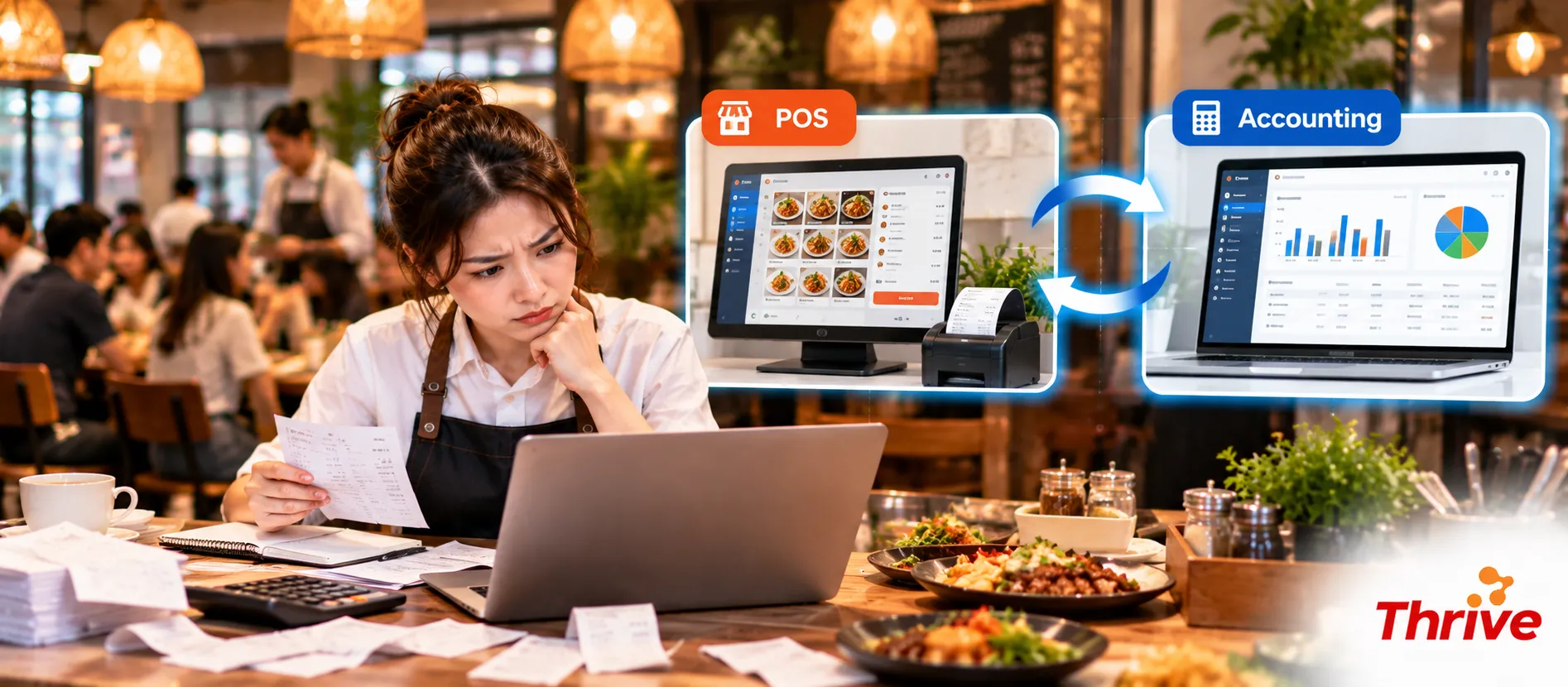
A restaurant may record high daily sales, but the owner may not necessarily know the true profit. This problem often arises when sales data from the POS and financial records are stored in different systems.
POS and accounting integration helps transaction data flow into financial records in a more structured manner. By choosing cheap original software, restaurants can also build operational systems using official licenses according to business needs.
High Turnover Doesn't Necessarily Mean High Profit
The following indicators indicate a restaurant needs to evaluate its system:
A turnover of IDR 100 million does not mean a profit of IDR 100 million.There are still COGS, salaries, rent, utilities, taxes, platform fees, and other operational costs.
Manual input increases the risk of data discrepancies.POS transactions must be moved back to accounting.
Profit is difficult to monitor daily.New financial reports are available after the reconciliation is complete.
POS and accounting integrationmaking sales data enter the financial recording process faster.
Usage cheap original software, can be considered to build a more integrated software ecosystem without ignoring the legality of licensing.
Why Do POS and Accounting Need to Be Integrated?
1. POS records sales, accounting sees the financial picture.
POS usually records transactions such as menu items sold, discounts, payment methods, taxes, and total sales.
Accounting has different functions. This system records revenue, expenses, liabilities, cash, and even profit and loss statements.
For example, if a restaurant generates Rp10 million in sales per day, that figure doesn't reflect profit if the cost of goods sold is Rp4 million and daily operating costs are Rp3 million.
Therefore, when searching cheap original softwareDon't just look at the transaction features. Consider how that data enters the financial system.
Election cheap original software, also need to consider APIs, integration features, and data export capabilities.
2. Manual Input Makes Profit Monitoring Slower
Imagine a restaurant has 300 transactions per day. The admin then summarizes the sales data into a spreadsheet or accounting software.
Besides being time-consuming, manual processes increase the risk of incorrect input, missed transactions, or incorrect amounts.
Integration can make POS transaction data sent to accounting automatically or on a schedule.
When evaluating cheap original software, check whether the system has an API or integration with other applications.
With cheap original software, restaurants should still choose a solution based on workflow needs, not just licensing price.
3. Profits Can Be Monitored More Quickly
Good integration allows management to not only ask, “What was the turnover today?”, but also start looking at costs and margins.
For example, sales might increase 20%, but raw material costs might increase 30%. Without connected financial data, this situation could be discovered too late.
Usage cheap original software, can be part of digitalization if the system is able to provide the data that management needs.
Make sure cheap original software, which is used also has reporting that is easy to understand by the operational and finance teams.
Checklist Before Integrating POS and Accounting
Before implementation, check the following things:
Map the sales data that must be entered into accounting.
Match product codes, taxes, payment methods, and financial accounts.
Make sure the POS has an API or data export feature.
Specify the synchronization frequency: real-time, hourly, or daily.
Perform reconciliation to ensure POS values match accounting.
When comparing cheap original software, use the checklist as a basis for evaluation.
Don't forget to make sure cheap original software, have technical support when the integration process is needed.
FAQ
1. What is the difference between POS and accounting software?
POS focuses on sales transactions, while accounting manages financial records and reports such as profit and loss and balance sheets.
2. Can POS be directly connected to accounting?
Yes, depending on the integration capabilities of each system. Some offer built-in integration, APIs, or data import and export.
3. Does integration have to be real-time?
Not always. Restaurants can use hourly or daily synchronization depending on operational and reporting needs.
4. Can integration reduce admin work?
Yes. Automating data movement reduces re-entry activities, but validation and reconciliation processes are still necessary.
5. Does a small restaurant need POS and accounting integration?
It doesn't have to be complex. If transactions start to become high and manual reconciliation is time-consuming, a simple integration is worth considering. cheap original software, can be adjusted to the operational scale.
6. What should be checked before purchasing software?
Check features, licensing, compatibility, API, data security, technical support, and total cost of use. Compare cheap original software, should be done based on overall business needs.
Conclusion
High sales don't automatically mean high profits. Restaurants still need visibility into COGS, operating costs, and transaction flow to understand the true state of their business.
POS and accounting integration makes sales data and financial records more connected. cheap original software, can be part of that strategy as long as the features and integrations meet the needs.
Eventually, cheap original software, which is not only about helping to record transactions, but also helping businesses build financial processes that are neater and easier to monitor.
Related Articles
Also read other interesting information from us

Can Pirated Antivirus Software Really Protect Company Computers?
Pirated antivirus software may appear active and capable of scanning, but that doesn't necessarily mean your compan...

General
Why a Catchy Title Can Increase Your Website Traffic
The title is the first element that visitors see when they find your website page. A catchy title is not just text that...

General
Fiduciary Regulations and Vehicle Repossession Risk: How Bookkeeping Can Protect Your Business
Fiduciary regulations give creditors the right to repossess vehicles if the debtor fails to meet payment obligations. Fo...
Get Free Consultation
Discuss your company's IT needs with our customer support right now at
+62 822 9998 8870


