Article Sep 28, 2026, 07:05 AM
Paying for Hundreds of Licenses but Many Go Unused? Watch Out for Over-Licensing
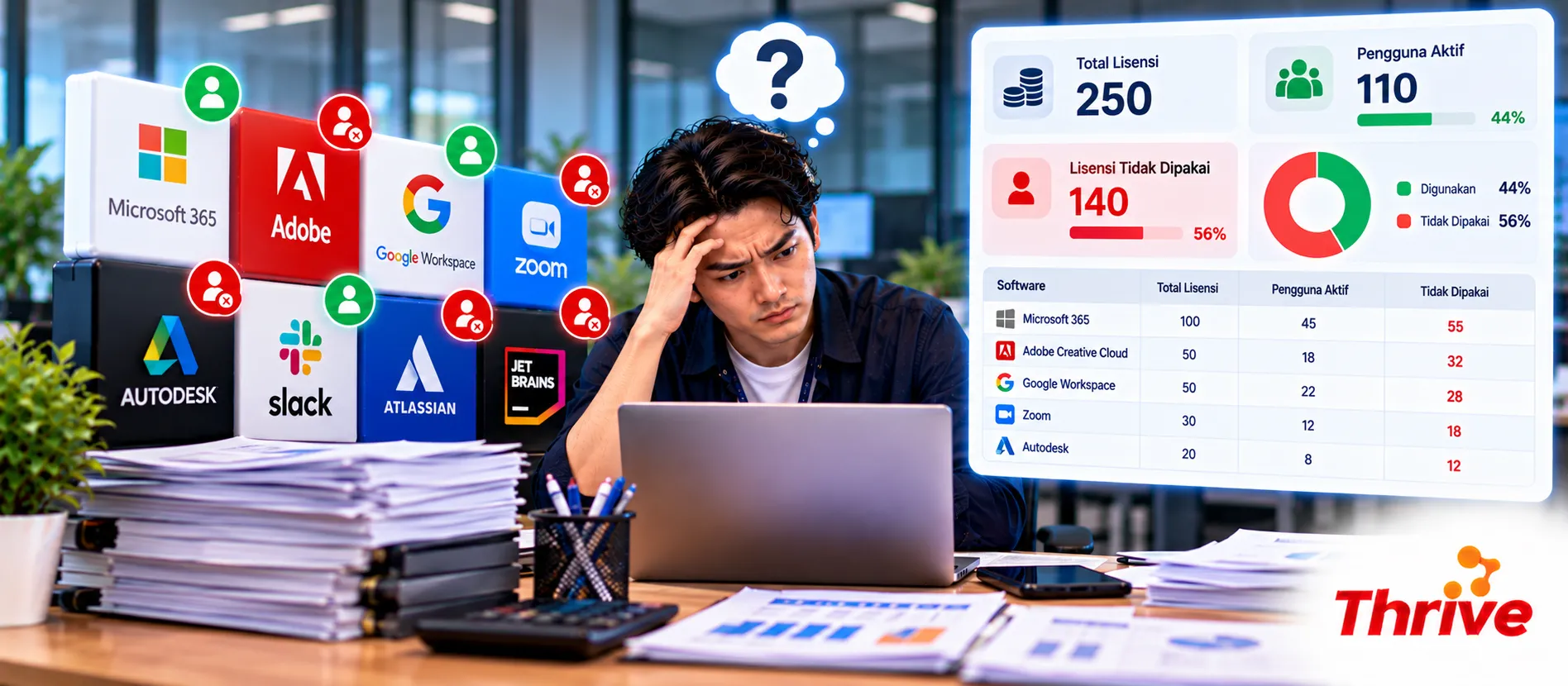
Companies often focus on avoiding license shortages, but there is another issue that can also drain the budget: over-licensing. This happens when the number of licenses purchased exceeds actual needs or usage.
For example, a company may pay for 200 seats while only 140 are active. That means 60 seats need to be evaluated. For this reason, purchasing affordable genuine software should not be based only on the number of employees, but also on actual requirements and usage data.
How Can You Tell If a Company Is Over-Licensed?
Compare purchased seats vs active users.
Calculate the license utilization rate = active licenses ÷ purchased licenses × 100%.
Identify users who have resigned, changed departments, or no longer use the application.
Review affordable genuine software at least 30–60 days before renewal.
For companies with frequent user changes, perform reviews every 3–6 months.
Why Do Companies Buy Too Many Licenses?
Over-licensing does not always happen because of a Procurement mistake.
As a company grows, licenses are usually added gradually. The problem is that these additions are often not followed by reductions when employees resign, change roles, or stop using the application.
As a result, the number of affordable genuine software licenses being paid for keeps increasing even though the number of active users is not growing at the same pace.
Calculate the License Utilization Rate
A simple way to detect waste is to calculate the license utilization rate.
For example:
Purchased Licenses: 200
Active Licenses: 140
Then:
140 ÷ 200 × 100% = 70% utilization
This means around 30% of the available license capacity is unused. However, this does not automatically mean that all unused seats should be removed, because the company may intentionally keep some licenses available for onboarding or specific operational needs.
Usage data for affordable genuine software should still be reviewed based on each user’s actual requirements.
Unused Seats Can Become a Significant Annual Cost
Suppose one subscription costs Rp250,000 per user per month and there are 40 unused seats.
The potential unused cost is:
40 × Rp250,000 × 12 = Rp120,000,000 per year
At this scale, reviewing affordable genuine software before renewal can have a direct impact on IT budget efficiency.
Companies can also redirect the budget for unused affordable genuine software licenses toward higher-priority technology needs.
Do Not Automatically Buy Licenses Based on Total Headcount
A company with 300 employees does not automatically need 300 licenses for every application.
Requirements should be mapped according to employee roles.
The design team may need creative tools, Finance may need accounting software, while Sales may rely on CRM. Some applications are only required by specific users.
That is why purchasing affordable genuine software should use a role-based licensing approach.
This helps keep the number of affordable genuine software licenses closer to actual needs instead of simply matching total headcount.
Connect License Management with the Offboarding Process
One common source of unused licenses is former employee accounts that are not reviewed promptly.
When an employee leaves the company, IT should run a checklist:
Disable Account → Check Assigned Software → Reclaim License → Reassign or Cancel
If the license allows reassignment, the seat can be allocated to another employee.
With this process, affordable genuine software licenses do not remain assigned to users who are no longer active.
Perform Rightsizing Before Renewal
Do not wait until the renewal invoice arrives.
Around 30–60 days before renewal, compare purchased seats, assigned seats, and active users.
For example:
Purchased: 250 → Assigned: 220 → Active: 185
The differences should be reviewed before determining the renewal quantity.
Through rightsizing, purchases of affordable genuine software can be adjusted based on actual usage without reducing access for users who genuinely need it.
7 Steps to Reduce Over-Licensing
Create an inventory of all company subscriptions.
Compare purchased seats with active users.
Flag accounts that have been inactive for a defined period.
Connect employee offboarding with the license reclaim process.
Apply role-based licensing for affordable genuine software based on job requirements.
Perform rightsizing 30–60 days before renewal.
Review usage of affordable genuine software every 3–6 months.
FAQ
1. What is over-licensing?
Over-licensing is a situation where a company owns more licenses than it actually needs, leaving some seats unused.
2. Does an unused license always mean wasted money?
Not always. Some companies intentionally maintain a buffer for onboarding or expansion. The important thing is that the additional capacity is planned and understood.
3. How can you tell whether a license is still actively used?
Check the last login, assigned user, application activity, device, and role requirements. The available data may vary depending on the software.
4. What is the ideal license utilization rate?
There is no universal percentage that applies to every company. The appropriate target depends on operational needs, employee growth, and the amount of buffer capacity required.
5. When should the number of licenses be reduced?
Evaluate licenses when employees resign, roles change, applications are no longer used, or before renewal. The number of affordable genuine software licenses can then be adjusted if permitted by the vendor’s terms.
6. Who should review unused licenses?
IT can review actual usage, Procurement manages contracts and vendors, while Finance monitors costs. All three functions should work from the same data.
7. Do affordable licenses still need to be optimized?
Yes. Even when the cost per seat is relatively low, purchasing a large number of licenses can create significant expenses. That is why the need for affordable genuine software should still be calculated based on actual users.
Over-licensing shows that software management is not only about making sure a company has enough licenses. Companies also need to make sure they are not paying too much for capacity that is not being used.
With software inventory, utilization monitoring, offboarding, and rightsizing, requirements for affordable genuine software can be planned based on actual usage.
Ultimately, proper management of affordable genuine software helps companies maintain the right balance between user requirements, compliance, and IT budget efficiency.
Related Articles
Also read other interesting information from us

General
Discover the Simulated Sine Wave Advantage of the ET PowerShield 1000VA Plus for Sensitive Devices
In the world of electronics, not all devices are created equal. Some devices, such as computers, routers, CCTV cameras,...

General
Implementing WebAssembly for High-Performance Web Applications
WebAssembly (Wasm) is a revolutionary technology that enables web applications to run with near-native performance. With...

General
ET PowerShield 1000VA Plus as a Power Backup Solution for Work From Home (WFH)
Working from home (WFH) has become a common work style in many sectors. However, one of the biggest challenges when work...
Get Free Consultation
Discuss your company's IT needs with our customer support right now at
+62 822 9998 8870


